Rebbecca Scales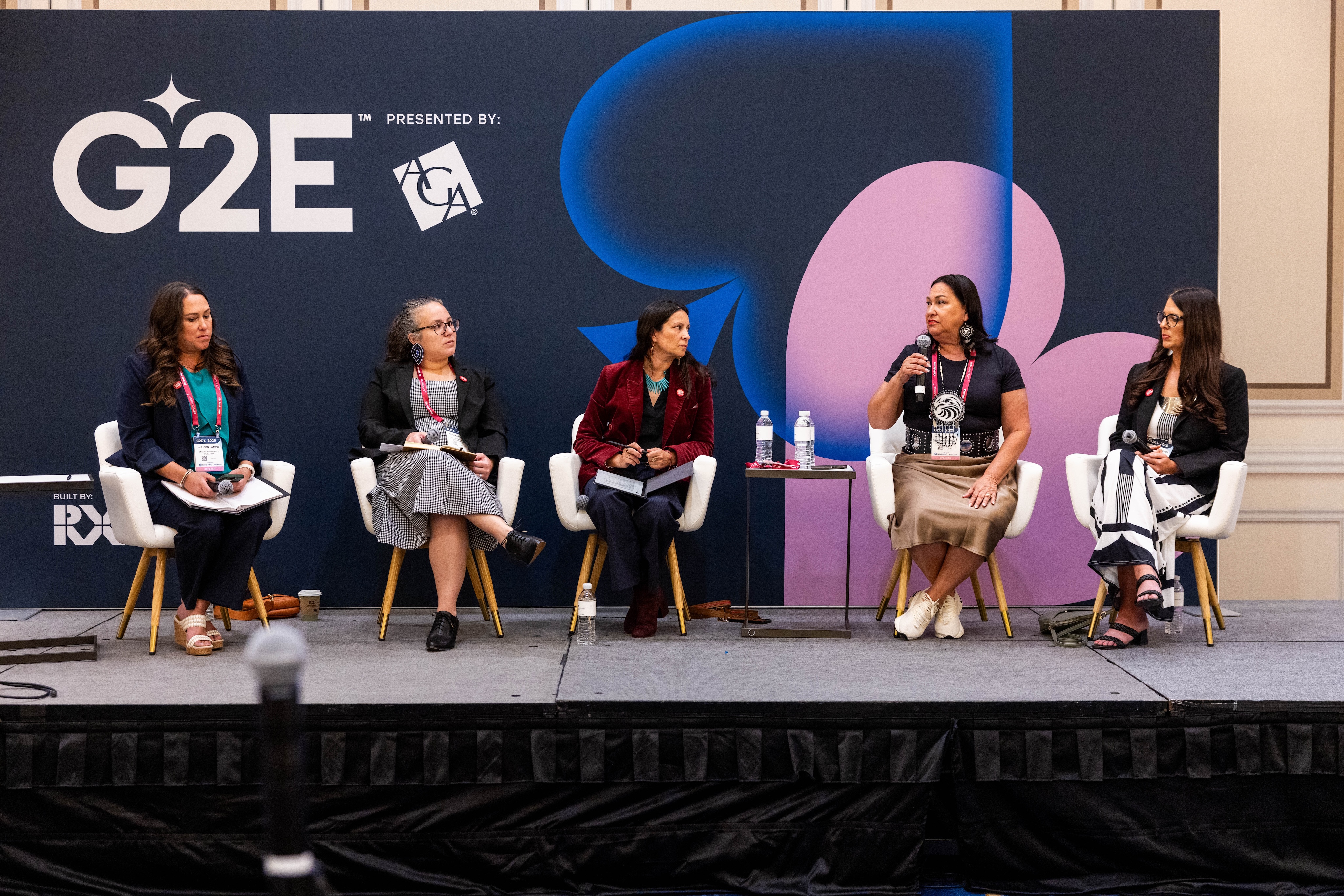
For over two decades, the Global Gaming Expo, also known as G2E, has been the hub of the gaming world. Each October at The Venetian Expo in Las Vegas, thousands of professionals, executives, designers, engineers, and regulators gather to map out what is next for casinos, entertainment, and gaming.
This year, the focus was not on jackpots or spectacle. It was on the data. G2E 2025 marked a decisive turn toward artificial intelligence (AI), automation, and the quiet systems that are reshaping everything from casino operations to corporate structure. Poker was not front and center, but its future could already be taking shape in the margins.
The AI Era Arrives
Artificial intelligence defined this year’s show floor. Every presentation circled back to the same idea: gaming’s future will be powered by algorithms, not instinct. AI now runs through nearly every layer of the business, from operations and surveillance to marketing and player analytics. It guides loyalty programs, risk management, and even hiring, with systems designed to identify talent or reduce bias, although those same systems often reinforce the patterns they claim to solve.
The conversation at G2E was less about what is possible and more about how far casinos are willing to hand decision-making over to machines.
From Cash to Cloud
Another theme emerged clearly: the shift toward cashless and contactless play. Buy-ins, payouts, and tips are increasingly digital. For operators, it is efficient. For players, it is subtle but psychological. Once chips and bills disappear, money stops feeling real and turns into data. Spending becomes frictionless, and that is the point.
Poker has not fully crossed over into this world, but it stands on the edge of it.
Dealerless and Data Driven
Companies like Jackpot Digital are already pushing poker into its next phase. Their Blitz Heads-Up Challenge, showcased at G2E, removes the dealer entirely and replaces human rhythm with touchscreen speed. Players face off against the house in an automated, continuous loop that feels more like a digital competition than a live game.
Digital poker tables are not new. They have existed for years on cruise ships and in smaller gaming markets, but this iteration is different. The technology has evolved from isolated tables into full networked systems tied directly to casino data streams. Every move, every bet, and every decision is recorded and analyzed, creating a feedback loop designed to shape behavior and maximize retention.
The Blitz table also illustrates the philosophy of gamification in action. It rewards speed over patience, repetition over reflection, and transforms poker into a system of constant input and reward. Built for movement, not stillness, it draws on the same behavioral psychology that powers mobile apps and social media, turning play into a loop of instant gratification.
That may appeal to a new generation of players raised on screens and streaks, but it also challenges the essence of what poker has always been—a game of rhythm, reading, and restraint. When you remove time and tension, you change not just the mechanics of poker, but the meaning of it.
Poker: The Last to Change, the First to Reflect
Poker has always been the last corner of the casino to change. It is slower, more personal, and harder to digitize. That delay makes it useful as a mirror. It shows where trends eventually lead once the novelty wears off.
In Las Vegas, The Venetian Poker Room might be the first glimpse of that future or at least a reflection of it. Its poker room is no longer on the main casino floor. Whether that move was logistical or strategic is not clear, but it feels telling.
As casino floors become faster, louder, and more algorithmic, slower games like poker seem to be drifting to the edges. It could be a smart repositioning or a quiet retreat. Either way, it reflects a change in casino psychology. What cannot be automated may no longer belong at the center.
When Data Does Not See Women
Artificial intelligence is not neutral. It learns from the past, and the past in gaming has been overwhelmingly male. Algorithms that define success are built on data from decades of play patterns, customer trends, and hiring models that rarely included women. When systems optimize for engagement or profit, they replicate those histories.
This imbalance extends far beyond the poker table. The same algorithms now used to recommend players promotions and predict spending habits are also shaping who gets interviewed, hired, or even noticed in recruitment for gaming and tech roles. When the data defining “qualified” or “profitable” comes from patterns that have historically favored men, it builds an invisible barrier that automation quietly enforces.
Marketing, too, reflects this blind spot. AI-driven campaigns learn from historical spending behavior, not potential. If women represent a smaller share of high-frequency players, the system naturally directs less attention, fewer offers, and smaller budgets their way. The result is circular: women are underrepresented in the data, so they are under-targeted in the market, which ensures they remain underrepresented in the next dataset.
This is why women must be part of building the systems shaping the future. Coders, engineers, and decision-makers hold the ultimate power over how AI learns and who it serves. If women are not in those rooms now, the next generation of digital intelligence will be written without them—and for an industry built on the power of reading people, that would be the biggest blind spot of all.
The Problem with Short Term Thinking
That same lack of perspective feeds into another challenge facing the industry: AI’s obsession with the short term. Artificial intelligence rewards what performs now, not what builds longevity. In gaming, this translates to engagement minutes, hands per hour, and spin frequency.
But short-term optimization is the enemy of diversity and development. When success is defined by immediate metrics, innovation stalls. The more systems focus on what is instantly profitable, the less room there is for new player types, slower games, and different ways to think.
Poker, with its emphasis on patience, reading, and nuance, is the first to feel that squeeze.
The Efficiency Equation
There was another undercurrent at G2E, efficiency as economics. Dealerless tables mean fewer staff. AI pit management reduces human oversight. Cashless systems minimize cage work. HR automation eliminates parts of hiring and training.
Each advancement cuts costs. It also cuts connection. The casino floor once thrived on energy and interaction, a rhythm created by people as much as by play. As machines replace people, that rhythm thins out.
It was not a topic that dominated the panels or keynote speeches, perhaps because the human side of automation is harder to quantify. You can measure savings and output, but not the loss of presence or community. For women, many of whom have only recently found space in these operational roles, this quiet shift carries an even deeper risk. Automation threatens to erase progress before it fully takes root.
 Why It Matters
G2E 2025 was less about where gaming is and more about where it is heading. The industry is becoming faster, cleaner, more efficient, and more dependent on systems that see people as data. Poker, slower and more human by nature, sits on the edge of that transformation.
Because the next evolution of poker will not be about chips or cards. It will be about who is coded into the future.
Editor’s Note
At Women Poker News, we believe artificial intelligence will shape the future of everything, from how we play to how we work, create, and connect. As this digital shift accelerates, women’s voices matter more than ever.
We will be publishing a series of pieces exploring AI through the lens of women in gaming, technology, and media. Our goal is to help more women understand, influence, and participate in shaping the digital age, because if we are not part of building it, we risk being left out of it.
Enlist in the #RPGArmy

Ready to go beyond the felt? Enlist in the #RPGArmy and join a movement powered by bold women, fearless content, and unapologetic poker energy. Signing up means you’ll be first to know about upcoming events, giveaways, coaching drops, and exclusive behind-the-scenes access to The Real Poker Girls Media universe.
This isn’t just a list—it’s a front row seat to the revolution.