WPN
WPN
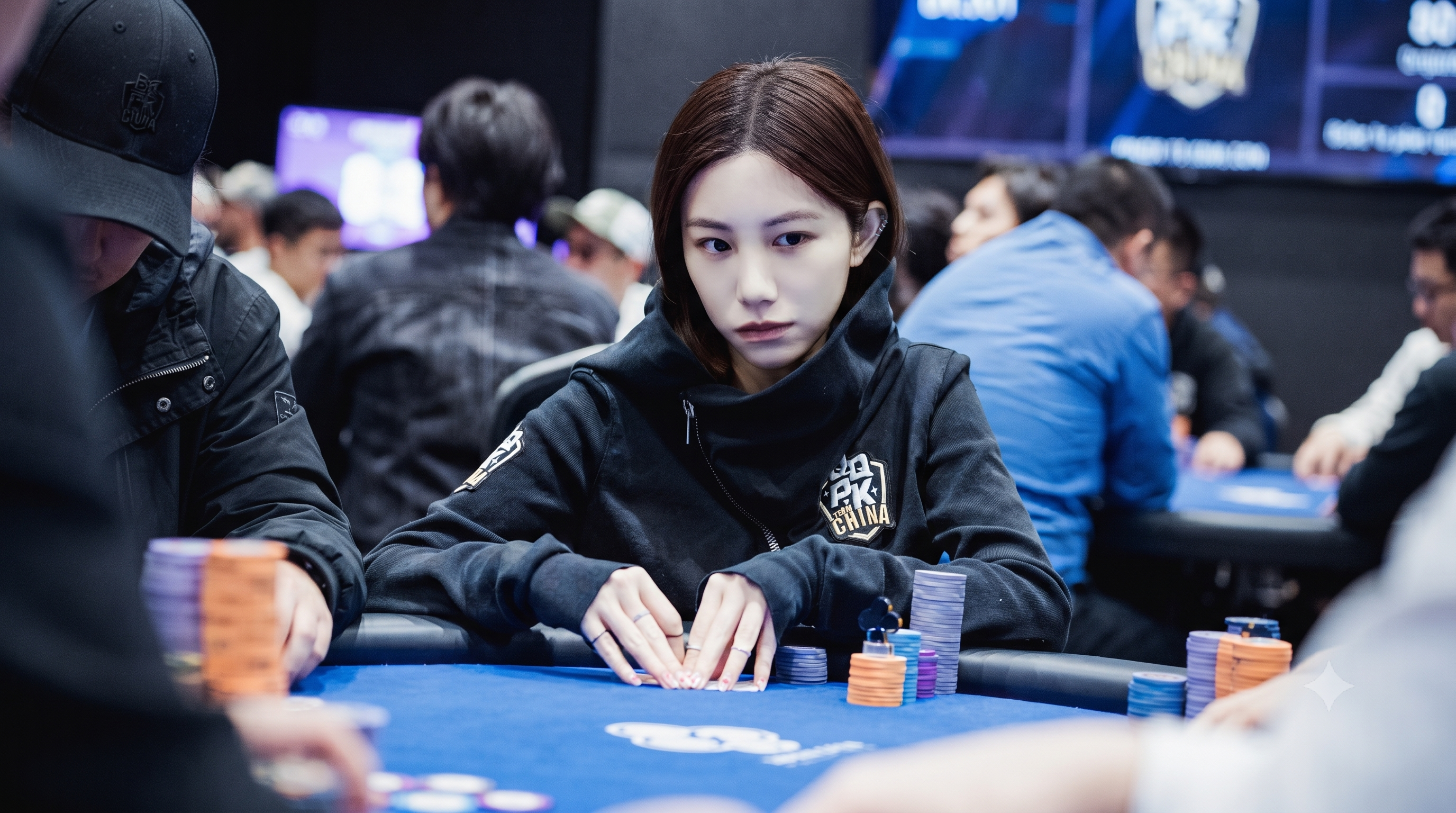
Skye Chen Wins the WSOP 2026 Ladies Championship
Skye Chen Wins Event #68: $1,000 Ladies No-Limit Hold’em Championship ($194,630)
Outlasting a field of 1,475 entries, Skye Chen captured the title in the 2026 WSOP Ladies Championship, earning $194,630 and the first WSOP gold bracelet of her career after an impressive run… pic.twitter.com/1Q6Ai4GtR8
— WSOP – World Series of Poker (@WSOP) June 29, 2026
In the modern poker ecosystem, the prevailing narrative states that the era of the pure amateur walking into a World Series of Poker arena and capturing a gold bracelet is dead. Today’s game is widely viewed as a closed loop dominated by data-driven grinders who spend forty hours a week studying solver simulations.
Then came Skye Chen.
Outlasting a record-shattering field of 1,475 entries in the 2026 WSOP $1,000 Ladies No-Limit Hold’em Championship, the San Francisco resident turned a casual Las Vegas trip into a historic $194,630 victory. Yet, when reporters rushed to audit her tournament pedigree on the industry-standard Hendon Mob database, they found an absolute enigma: a completely blank profile.
This historic victory wasn’t just her first career win—it was her first-ever recorded cash of any kind, in what was only the second live tournament she had ever played.
The Illusion of the “Amateur”
In her post-victory interview, Chen candidly acknowledged the perceived gap between her tournament resume and the players she defeated. She noted that she, like many, assumed the era of the pure amateur showing up and winning a bracelet was largely over, and admitted she never would have believed she could accomplish the very same feat.
She admitted that she had harbored a dream of winning a bracelet ever since she was a kid watching the WSOP on ESPN, learning the rules of the game at a time when she definitely wasn’t very good.
But minimizing Chen’s performance as a simple fluke of tournament variance completely misinterprets how modern strategic minds operate. Her sudden arrival proves that when it comes to developing elite card sense, there is more than one way to skin a cat. She didn’t learn the game through traditional tournament grinding; she built her mental architecture through high-level cognitive cross-training.
The Transferable Assets of Mind Sports
In 2010, the International Mind Sports Association (IMSA) officially recognized poker as a “mind sport,” putting it in the exact same category as chess, bridge, and Go. What Chen proved on the casino floor is that the underlying cognitive muscles required for these disciplines are entirely fluid.
Chen spent 11 years working as a software engineer before taking a career hiatus to travel. Over the last two years, she quietly built a baseline poker toolkit not by flying to tournament stops, but by playing live cash games, steadily moving up from $1/$3 to highly competitive $5/$10 sessions.
More importantly, her trip to Las Vegas wasn’t even scheduled around poker. She traveled to the city with the Vegas Dragons club to provide moral and logistical support for close friends competing in a major Mahjong tournament. Because she had free time while her friends played, she wandered into the Horseshoe and took a shot at the Ladies Event.
While Mahjong and software engineering may seem unrelated to No-Limit Hold’em, they demand identical mental habits:
-
Systemic Information Processing: Engineering requires cold logic and a deep comfort with variance—the mathematical reality that a correct system can still yield short-term negative results.
-
Imperfect Information Management: Competitive Mahjong forces players to track discarded tiles, deduce opponents’ hidden holdings, and sit under intense television spotlights for hours without losing focus.
Chen explained her rapid development as a natural product of intense focus, noting after her win that when she commits to a goal, she has the ability to put in the time, grind, and learn incredibly fast.
Fearless with Air: Three-Handed Warfare
When the tournament reached the final three players—Skye Chen, experienced online professional Aubrey Williams, and seasoned veteran Lisa Teebagy—the dynamic shifted into a high-stakes psychological war. This is the exact moment where tournament rookies usually play it safe, waiting for premium cards and trying to ladder up in prize money.
Instead, Chen showed the poker world that she wasn’t there to play scared.
In a massive blind-versus-blind battle against Williams, Chen opened the action, called a hefty three-bet preflop, and then took the driver’s seat. After the flop checked through, Chen fired a 1.2 million bet on the turn, and then emptied the clip on the river, blasting a massive 3.6 million shell into a 6.5 million pot.
The problem? She had absolute air. Total nothing.
Williams checked her cards, spent a long time in the tank, and ultimately made a spectacular soul-read call. The failed bluff stripped Chen of nearly her entire stack, crippling her to fewer than 10 big blinds and seemingly knocking her out of contention.
The Mind-Sport Resiliency & The Comeback
In standard tournament poker, a blowup of this magnitude is a death sentence. Ninety-nine percent of amateur players would immediately succumb to “tilt”—feeling the crushing weight of a public mistake, throwing away their remaining chips in frustration, and busting a few hands later.
But this is exactly where Chen’s mind-sport conditioning gave her a massive edge over traditional players. In competitive Mahjong or high-stakes software engineering, a bad run or a failed execution is just a data point. Instead of tilting, Chen treated her 10-big-blind stack as a completely new puzzle to solve. She locked down, adjusted her ranges, and refused to go quietly.
Her patience paid off almost instantly. Moments later, she found herself in a classic tournament flip with pocket fives (5♣5♢) against Lisa Teebagy’s Ace-Jack (A♣J♢).
The flop brought a massive sweat, giving Teebagy an incredible 17 outs to win the hand. But the turn card slammed down a five, locking up a winning full house for Chen and completely eliminating Teebagy in 3rd place ($93,149). With that knockout, Chen punched her ticket to an improbable heads-up rematch against Williams.
Trusting Logic Over Intimidation in Heads-Up
Entering the final duel, Chen was still facing an uphill battle against an incredibly seasoned online pro. During a critical moment in the match, Williams fired a massive river bet, forcing Chen into a brutal decision for her tournament life.
Rather than trying to recall a pre-calculated solver chart, Chen relied entirely on fundamental logic and reading the human element of the hand.
Reflecting on the heads-up match in her post-tournament interviews, Chen explained her thought process during high-pressure decisions. She noted that when a line doesn’t make logical sense or a bet sizing feels designed purely to intimidate, she leans on her analytical instincts. Acknowledging she wasn’t as studied as her opponent, she realized she had to be willing to take high-leverage gambles to win the tournament. Trusting her logic, she made a spectacular hero call to completely snap the momentum of the match and seize a commanding lead.
Minutes later, the tournament concluded on a classic flip. Chen moved all-in with pocket fours (4♣4♢), and Williams called with Ace-Five suited (A♣5♣). The board ran out clean: 8♢9♢9♡Q♠T♢. The pocket fours held up, securing the final pot, the prize money, and the gold bracelet.
A Proven Pattern of Crossover Success
Chen’s historic victory shouldn’t be viewed as an isolated anomaly. Instead, it mirrors a broader trend we are seeing across the mind-sports world.
Look no further than Chess Grandmaster and PokerStars Ambassador Jennifer Shahade. Shahade seamlessly imported the deep decision-tree calculation and hyper-rationality of elite chess into the poker world, proving that a mind trained to think five moves ahead can easily decipher a betting range.
Ultimately, Skye Chen’s victory does more than just inject a thrilling bit of mystery into the poker history books. It serves as a stark reminder that poker is, at its core, a pure battle of logic, data processing, and emotional discipline. You don’t need to live in a solver cave to win a gold bracelet; sometimes, you just need a mind that knows exactly how to solve a complex puzzle under fire.
Enlist in the #RPGArmy

Ready to go beyond the felt? Enlist in the #RPGArmy and join a movement powered by bold women, fearless content, and unapologetic poker energy. Signing up means you’ll be first to know about upcoming events, giveaways, coaching drops, and exclusive behind-the-scenes access to The Real Poker Girls Media universe.
This isn’t just a list—it’s a front row seat to the revolution.